
Create the Right Year-End Check List

The end of the year is a great time to review your QuickBooks Online account and make sure everything is in order. Here’s a quick checklist to help you get started:

1. Is everything reconciled? 

How do I know? Use reports>For My Accountant>Reconciliation Report
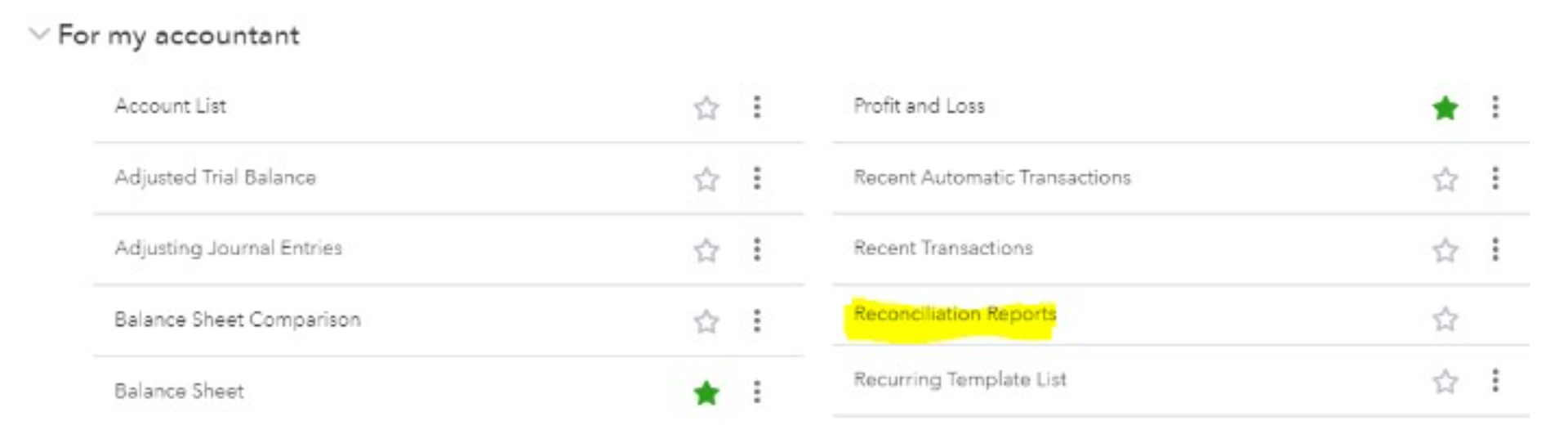
A table with a yellow star in the middle of it.

Chose each bank account to see when it was last reconciled and if the statements are attached

A screenshot of a website showing the history of an account.

Review the most recent Reconciliation report. What is outstanding for more than 30 days? Look into those transactions and make adjustments as needed.

2. Track your mileage.

 If you need to have your mileage tracked for tax purposes, do it now. There are plenty of apps that can help you with this and there is one right inside of QuickBooks Online:

A screenshot of a website that says track mileage automatically and get $ 0.85 a mile

3. Gather your receipts.

 Make sure you have taken your paper or digital receipts and have them stored on your computer or inside of QuickBooks Online. There is a receipt capture feature inside of QuickBooks Online that can streamline this process. You can upload receipts from your computer, Google drive or have them sent by email directly into QBO.
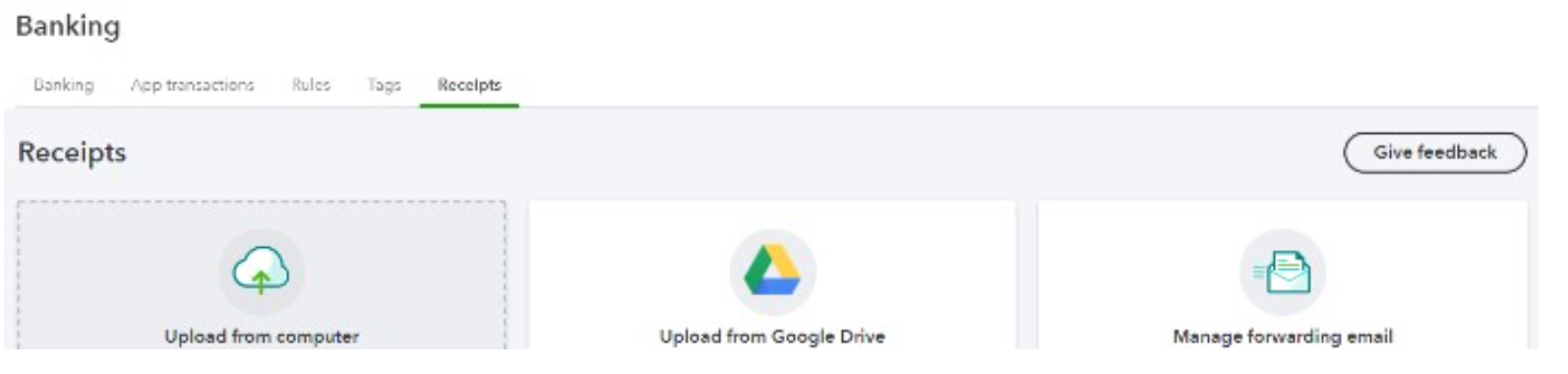
A screenshot of a website with three icons on it.

Other apps that do an exceptional job of this are Expensify and Divvy. They are very helpful when you have employees who need to provide expense reports and reimbursements.

4. Verify vendor information

It becomes very difficult in January to hunt down vendors for their W-9s. Start now, if you haven’t already by asking vendors for W-9s to keep on file. Make sure their email and physical addresses are up to date, because 1099 forms are sent electronically or mailed. Having done these tasks will make things go smoothly when it comes time to file 1099s to the IRS.

5. Payroll

Are benefits and salaries being calculated properly? You can ask your payroll provider for reports to review and make sure these items are what you are expecting. Start to think about year end profit sharing or bonuses and what those will look like.


We hope this helps you get started on your end of year review. If you have any questions, be sure to reach out to our team of experts. We’re always happy to help!

Our Latest Insight


By Alisa McCabe May 13, 2026
​Every business experiences fluctuations throughout the year. Some industries see demand surge during certain seasons and decline during others. While these cycles are common, the financial pressure that arrives during slower months can feel overwhelming without preparation. Strong small business accounting plays an essential role in navigating these shifts. When owners understand their financial position and take proactive steps before revenue dips, they gain more control over how their organization performs during quieter periods.  Preparing early creates stability. A thoughtful checklist allows entrepreneurs to review expenses, strengthen cash flow planning, and position their company to remain resilient even when sales temporarily decline.
By Alisa McCabe April 28, 2026
Why Predicting Cash Flow Can Feel Difficult Many entrepreneurs struggle with forecasting because business conditions rarely remain stable. Seasonal fluctuations, changing customer behavior, and market shifts can create unpredictable revenue patterns. Uncertainty often leads owners to question whether projections are even worthwhile. Forecasts that fail to match reality can feel frustrating, especially when unexpected events disrupt plans. The purpose of forecasting, however, is not perfect prediction. Financial projections help leaders understand potential outcomes and prepare for a range of scenarios. A clear picture of possible results makes it easier to navigate uncertainty with confidence. When viewed as a planning tool rather than a guarantee, forecasting becomes far more valuable. Using Scenario Planning to Prepare for Different Outcomes Scenario planning strengthens forecasting by exploring multiple possibilities instead of relying on a single estimate. This approach allows entrepreneurs to understand how different circumstances might affect their financial position. A basic scenario planning process typically includes: An optimistic projection based on stronger-than-expected revenue A realistic estimate using historical performance patterns A conservative projection that assumes slower sales or delayed payments Reviewing these scenarios helps leaders understand how much financial flexibility exists under various conditions. Planning for multiple outcomes also reduces stress when unexpected changes occur. Organizations that regularly evaluate different financial scenarios are often better prepared to respond to market fluctuations. Building Financial Buffers for Greater Stability A contingency buffer provides an important safety net when actual results fall short of projections. Even a well-constructed forecast cannot eliminate every risk, which makes financial reserves an essential part of planning. Cash reserves allow businesses to maintain operations during slower periods or unexpected disruptions. These funds may cover payroll, vendor obligations, or essential operating expenses when revenue temporarily declines. Creating a financial buffer usually requires consistent discipline. Setting aside a portion of profits during strong months can gradually build a reserve that strengthens stability. Having this cushion reduces pressure and gives leaders more time to make thoughtful decisions when challenges arise. Creating Flexible Spending Frameworks Forecasting works best when spending plans remain adaptable. A rigid budget can become problematic if revenue changes significantly throughout the year. Flexible financial frameworks allow owners to adjust spending as actual results unfold. Certain expenses may remain fixed, while others can be scaled based on performance. Several practices support this flexibility: Prioritizing essential operating costs before discretionary spending Delaying non-critical investments until revenue targets are achieved Reviewing financial performance regularly to guide adjustments This approach helps organizations remain responsive to real conditions rather than relying solely on early projections. Build Stronger Financial Clarity for Your Business Forecasting uncertainty becomes far more manageable when supported by accurate financial records and clear reporting. Reliable financial data allows entrepreneurs to create realistic projections and evaluate how their organizations are performing throughout the year. First Steps Financial helps business owners strengthen their financial visibility through fractional bookkeeping and financial consultation services that support effective cash flow forecasting. Organized records and thoughtful analysis allow leaders to plan ahead while remaining flexible as conditions evolve. If you want greater confidence in your financial planning and support building stronger cash flow forecasts, reach out to First Steps Financial today to start the conversation.
By Alisa McCabe April 21, 2026
Here are five business strategies to help you regroup, reassess, and rejuvenate your business halfway through 2026. Celebrate Your Accomplishments Take time to pat yourself on the back and congratulate the people around you for the goals you’ve reached and the efforts your team has made on your behalf. You might be shocked when you think about how far you’ve come. Maybe you’ve hired another team member and your team is the largest it’s ever been; perhaps you’ve reached record revenue goals; possibly you’ve solved a complex supply chain problem. We all could use more praise and more celebrations in our lives. Perhaps you can organize a party, or if you are not the partying type, a quiet word individually with your team can go a long way, maybe more than you know. Take a Vacation If you’re feeling quite burned out, the best thing you can do is stop and take a breather. There’s nothing better to rekindle your creative juices than to get away from the business for a while. Summertime is when most people take a vacation, so if your business is not having its busy season, this might be a good time to go away, even if for a little while. If you’re anxious about being away from your business, you’re not alone. In your annual planning process, plan for and block out your vacation way ahead of time. Book the reservations with no refunds several months in advance so that you won’t chicken out at the last minute. There is life beyond your business, and you will be a better business owner when you take regular breaks away. Schedule a Mid-Year Review How has your business fared for the first half of 2026 compared to the goals you set at the beginning of the year? Are you on track to reach your goals? Should you design a course correction or are you on track? Maybe you’re even ahead of plan! You can make this process as informal or formal as you want. Some businesses hold retreats; you may simply need some quiet time on a weekend when all your family is busy doing something else. Be Selective About the Projects You Start Is your plate too full? Entrepreneurs that wear many hats would probably say “yes” to that question, so the next question is do you have to do it all at once? Ask yourself what you can afford to stop doing that doesn’t make sense. Is there a project or two that can wait? If so, decide to stop stressing about not getting it done and give yourself permission to put it on the back burner for now. Play Big Maybe you’re not playing big enough. You might be busy, but are you busy with the things that will take your business to the next level? Do the thing you’re afraid to say “yes” to; the thing that you know will transform your business and get you closer to your dreams. If you’re putting off a project that you know will pay back handsomely, then shelve everything you’re working on and start on the one that will reap the most rewards. It could be a new product or service line, a new ad campaign, a new hire, a new joint venture, new financing, or even a new partner, which is very big indeed. You likely know what it is you need to do; your gut has been telling you for a while now. Just get it started, and it will then become easier. Summertime is a great time to regroup, re-energize, and refresh your business. Try one of these five tips to spice up your summer as well as your business success.

CONTACT US

Contact Us