

The Silent Profit Killer: How Payment Processing Fees Are Eating Your Bottom Line
Digital payments have become the standard for modern commerce. Whether customers tap a card at a register or complete an online checkout, convenience drives sales. Behind the scenes, however, many business owners overlook one quiet expense that steadily reduces profitability. Payment processing fees are often small on a per-transaction basis, yet they add up quickly across hundreds or thousands of sales.
Many entrepreneurs accept these charges as a routine cost without fully understanding how they work or how much they truly impact financial performance. Taking a closer look at how credit card processing operates can reveal hidden opportunities to protect margins and make more informed decisions.
Many entrepreneurs accept these charges as a routine cost without fully understanding how they work or how much they truly impact financial performance. Taking a closer look at how credit card processing operates can reveal hidden opportunities to protect margins and make more informed decisions.

Understanding What Payment Processing Fees Actually Include
A typical business transaction involves more than just the swipe of a card. Several participants play a role in moving funds from the customer’s bank account to the merchant’s account.
Processing costs generally include three core components:
- Interchange fees: Charges set by card networks and paid to the issuing bank for handling the transaction
- Assessment fees: Network charges collected by companies such as Visa or Mastercard for using their infrastructure
- Gateway or service fees: Costs paid to payment processors that manage authorization, settlement, and reporting.
Each component contributes to the total amount deducted from every purchase. Together, they form the full cost of credit card processing services.
While the percentages vary depending on card type, industry, and transaction method, many companies pay somewhere between 2-3% for each sale.
The Real Cost Per Transaction
A 2% charge might appear minor at first glance. The true impact becomes clearer when owners translate percentages into actual dollars.
Consider a company generating $500,000 in annual card revenue. A 2.9% rate results in roughly $14,500 paid in processing charges. Increase annual revenue to $1 million and the cost rises to about $29,000.
These numbers illustrate how credit card processing fees quietly accumulate. When organizations rely heavily on electronic payments, the yearly burden can rival other major operating expenses.
Understanding this total cost helps leaders treat processing charges as a controllable financial factor rather than an unavoidable background expense.
Why High Volume Businesses Feel the Pressure Most
Industries with frequent transactions often experience the greatest impact from credit card processing. Restaurants, retail stores, subscription services, and e-commerce operations typically process large volumes every day.
Even small adjustments in rates can produce meaningful savings in these environments. A reduction of half a percentage point may translate into thousands of dollars over the course of a year.
The challenge lies in visibility. When costs are spread across hundreds of deposits and statements, they can easily blend into normal accounting activity. Businesses that examine their merchant reports regularly gain a clearer understanding of how these charges influence profitability.
Practical Ways to Reduce Processing Costs
Entrepreneurs cannot eliminate payment processing entirely, yet several practical steps can help reduce unnecessary expenses.
- Review merchant statements carefully to identify hidden charges or unnecessary service add-ons
- Negotiate rates with processors once transaction volume increases
- Encourage debit payments or lower cost methods when appropriate
- Evaluate whether the current provider still offers competitive credit card processing services
Small adjustments can create noticeable financial improvement over time. Regular monitoring also helps ensure fees remain aligned with the organization’s current transaction profile.
Strengthen Financial Visibility and Protect Your Margins
Processing costs represent one of many operational expenses that quietly affect profitability. Strong financial oversight allows leaders to recognize patterns, evaluate vendor relationships, and make adjustments when necessary.
First Steps Financial supports entrepreneurs through fractional bookkeeping and financial consultation designed to improve visibility across operating expenses, including credit card processing fees. Clear reporting and organized records help owners understand where money is going and where improvements may exist.
If you want clearer insight into your financial data and assistance in evaluating payment processing expenses, reach out today to start the conversation.
Our Latest Insight

Article 2 ended with a question. What would you actually see first if this relationship started breaking down inside your business? Here is the answer. You would see five things. If you are like most owners reading this, you are already looking at two or three of them. None of the five announces itself as a communication problem. Each one shows up as friction inside your accounting systems, wearing a perfectly reasonable disguise. That is the difficulty. On the surface, none of these looks like a broken relationship. Each looks like something else entirely. A busy month. A tough quarter. A personality difference between two people who were never going to be friends anyway. Every one of them gets explained away the first time you see it. That is exactly what makes them expensive. This article does not fix any of it. Article 4 does that. The job here is naming what is already sitting in front of you. Most owners walk past these signs for years without recognizing what they are looking at. Part 3 of a 5-part series on the COO-Accounting relationship

Article 1 ended with a question. When does your COO actually talk to Accounting before a decision gets made? How long did it take you to answer? Immediately? Minutes? Maybe you could not think of a single example. Bills get paid, projects keep moving, and financial reports show up. Nothing feels obviously broken, so you conclude everything is fine. If that question made you uncomfortable, you are not alone. Here is the part that keeps this problem alive. You only know what good looks like based on what you have already lived through. Most owners have never worked inside a business where Operations and Accounting were intentionally built to function together. So they measure their company against their own status quo. This article gives you a different reference point. You will see what the relationship looks like day to day, what rhythm it runs on, and five things you can check this week. None of it requires scrapping what you have built. The people are already in the building. The data already exists. What changes is how the pieces are arranged, and how much leverage you get out of the company you have right now. Part 2 of a 5-part series on the COO-Accounting relationship
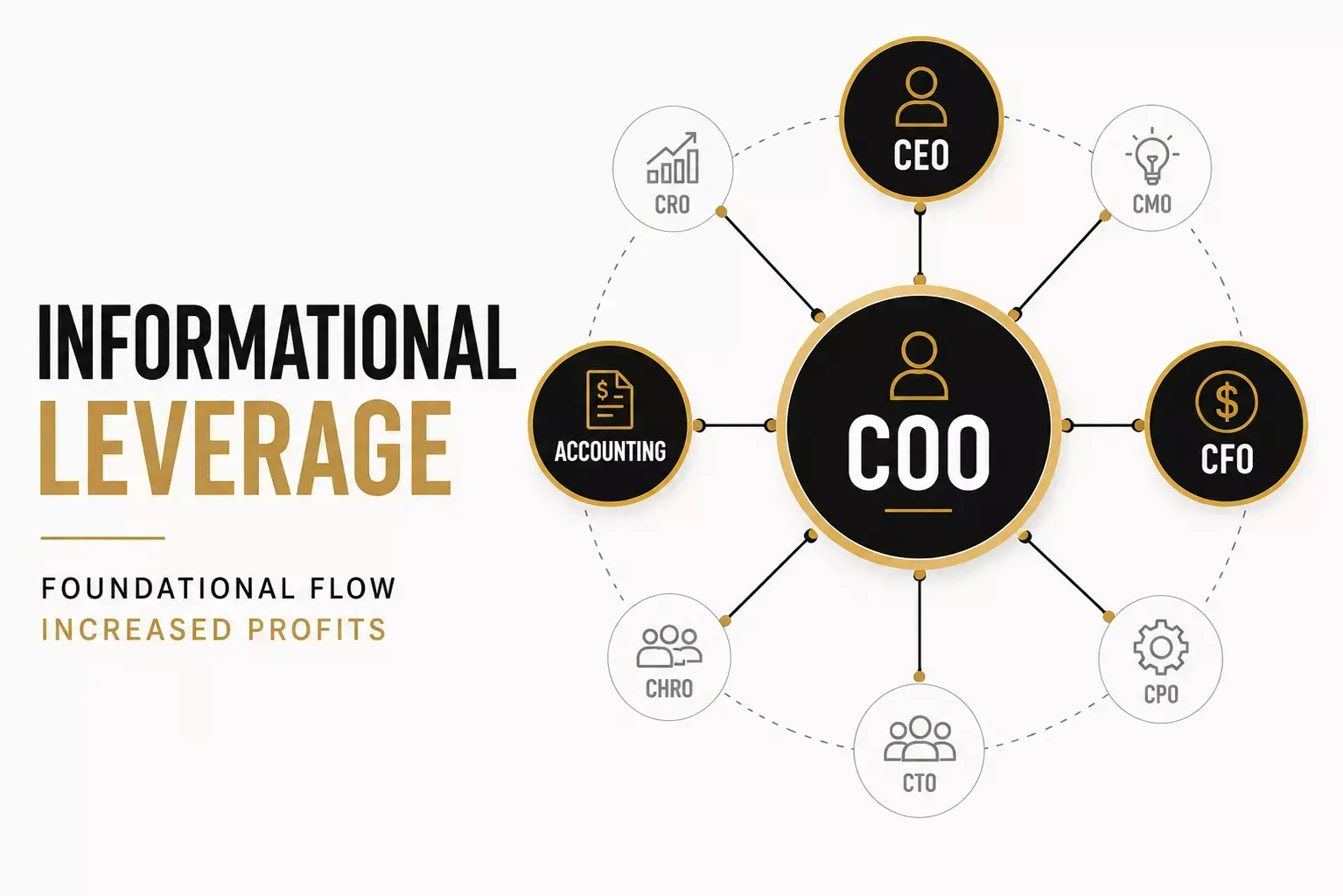
"Accounting is a stick in the mud." "I'm not really sure what a COO does all day." "The CFO just plays around with their little Excel sheets." You have probably heard one of those lines. You may have thought one yourself. They sound like harmless office humor. They actually point to something expensive. In most growing service businesses, nobody has ever defined how operations and accounting work together. The people who produce your financial reports sit outside the very decisions those reports are meant to inform. That gap costs you every single month, quietly, in profit that should have been there. Part 1 of a 5-part series on the COO and Accounting relationship