

Business Recovery Plan: Financial Strategies to Rebuild Your Business After a Difficult Period
Every business faces challenging times, whether from economic downturns, unexpected crises, or internal struggles. The key to emerging stronger lies in implementing sound financial strategies that address immediate concerns while building long-term resilience. Recovery isn't just about surviving; it's about strategically repositioning your business for sustainable growth and profitability.

Assess Your Current Financial Position
Before implementing any recovery plan, you need a clear understanding of where your business stands. Conduct a comprehensive financial audit that examines cash flow, outstanding debts, operational costs, and revenue streams. This baseline assessment reveals which areas require immediate attention and which assets can support your recovery efforts.
Create a detailed balance sheet that includes all liabilities and assets. Identify which expenses are essential and which can be reduced or eliminated. This honest evaluation forms the foundation for all subsequent recovery decisions.
Prioritize Cash Flow Management
Cash flow often determines whether a business survives or fails during recovery periods. Implementing effective financial strategies focused on cash flow means accelerating receivables while managing payables strategically. Consider offering early payment discounts to customers while negotiating extended terms with suppliers.
Review your inventory management practices to free up capital tied in excess stock. Apply just-in-time ordering principles where feasible, and liquidate slow-moving inventory to generate immediate cash. Every dollar of improved cash flow strengthens your operational flexibility.
Restructure Debt and Obligations
When facing financial pressure, proactive debt management becomes crucial. Contact creditors early to discuss restructuring options before accounts become delinquent. Many lenders prefer working with businesses that communicate openly rather than dealing with defaults.
Consider these debt management approaches:
- Consolidate multiple high-interest debts into single, lower-rate obligations
- Negotiate payment plans that align with your current cash flow capacity
- Explore refinancing options for long-term debts to reduce monthly obligations
- Prioritize secured debts to protect essential business assets
Revise Your Budget and Reduce Costs
Developing lean operational financial strategies requires examining every expense category. Distinguish between costs that directly generate revenue and those that don't. Focus cuts on non-essential areas while protecting investments that drive customer acquisition and retention.
Renegotiate contracts with vendors, explore alternative suppliers, and consider shared services or outsourcing for non-core functions. Small cost reductions across multiple categories create significant cumulative savings that improve your bottom line.
Diversify Revenue Streams
Recovery plans shouldn't rely solely on cost-cutting. Smart financial strategies also emphasize revenue generation through diversification. Analyze your customer base to identify underserved needs or complementary products and services you could offer.
Explore new market segments, develop strategic partnerships, or create subscription-based offerings that generate predictable recurring revenue. Digital channels often provide cost-effective ways to reach new customers without substantial upfront investment.
Build Financial Reserves
Once stabilization begins, prioritize building an emergency fund. Even modest reserves provide crucial breathing room during future challenges. Allocate a percentage of monthly profits specifically for this purpose, treating it as a non-negotiable expense.
Consider these reserve-building tactics:
- Set aside 5-10% of monthly revenue automatically
- Deposit unexpected windfalls or tax refunds directly into reserves
- Maintain a separate account to avoid temptation of accessing funds
- Gradually increase reserve targets as profitability improves
Monitor Progress and Adjust
Successful financial strategies require ongoing monitoring and adjustment. Establish key performance indicators that track recovery progress, including profitability ratios, cash flow metrics, and debt-to-equity ratios. Review these indicators monthly to identify trends early.
Stay flexible and willing to modify your approach based on results. What works initially may need refinement as circumstances evolve. Regular financial reviews ensure your recovery plan remains aligned with current realities and future objectives.
Transform Your Business: Partner With Financial Experts for Sustainable Recovery
Rebuilding your business after difficult times demands expertise, commitment, and proven financial strategies tailored to your unique situation. You don't have to navigate this journey alone.
At First Steps Financial, we specialize in helping businesses develop and implement comprehensive financial strategies that drive results. We'll work alongside you to analyze your situation, identify opportunities, and create an actionable plan to restore financial health and position your business for growth. Ready to build a stronger, more resilient future? Let’s connect.
Our Latest Insight

Article 1 ended with a question. When does your COO actually talk to Accounting before a decision gets made? How long did it take you to answer? Immediately? Minutes? Maybe you could not think of a single example. Bills get paid, projects keep moving, and financial reports show up. Nothing feels obviously broken, so you conclude everything is fine. If that question made you uncomfortable, you are not alone. Here is the part that keeps this problem alive. You only know what good looks like based on what you have already lived through. Most owners have never worked inside a business where Operations and Accounting were intentionally built to function together. So they measure their company against their own status quo. This article gives you a different reference point. You will see what the relationship looks like day to day, what rhythm it runs on, and five things you can check this week. None of it requires scrapping what you have built. The people are already in the building. The data already exists. What changes is how the pieces are arranged, and how much leverage you get out of the company you have right now. Part 2 of a 5-part series on the COO-Accounting relationship
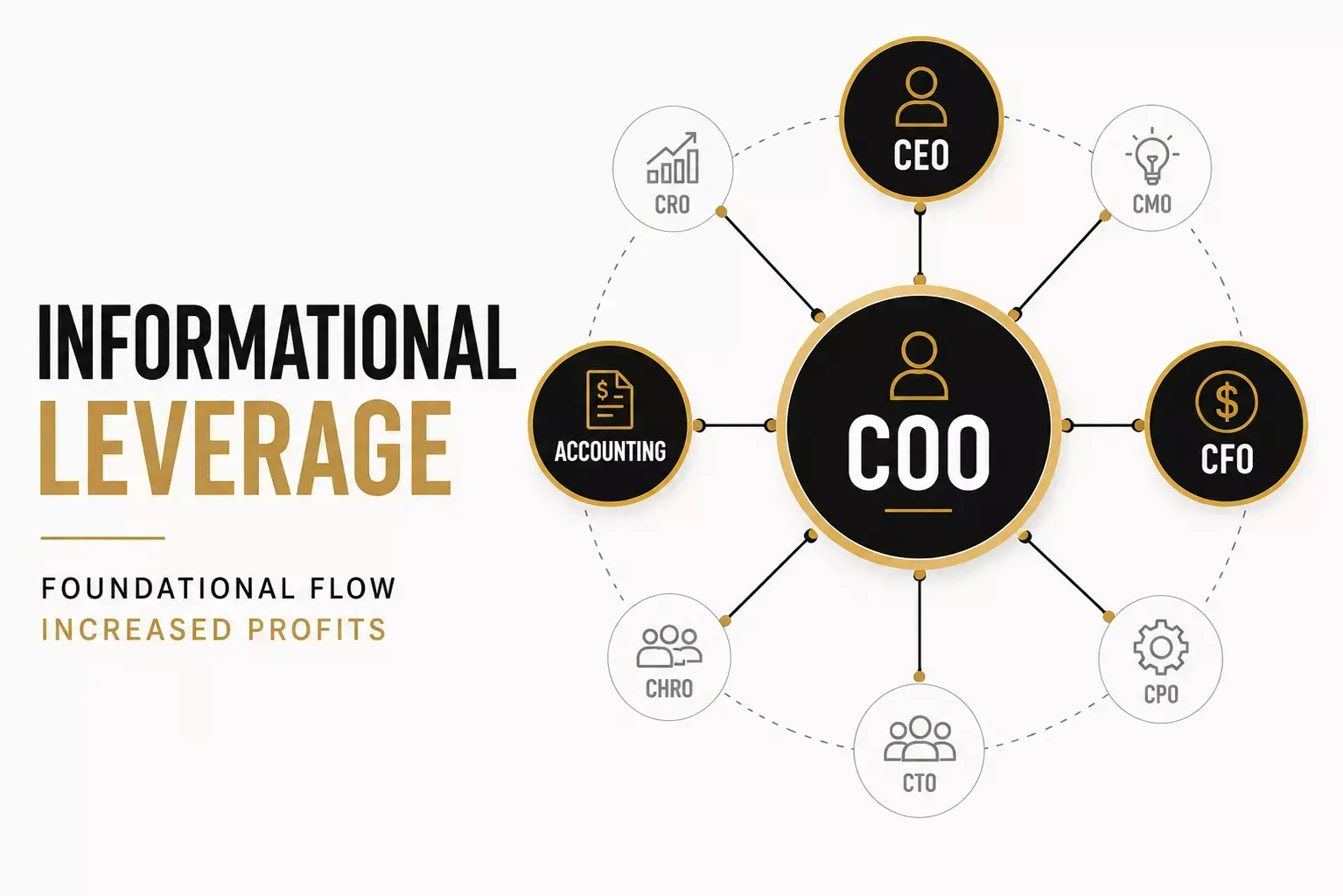
"Accounting is a stick in the mud." "I'm not really sure what a COO does all day." "The CFO just plays around with their little Excel sheets." You have probably heard one of those lines. You may have thought one yourself. They sound like harmless office humor. They actually point to something expensive. In most growing service businesses, nobody has ever defined how operations and accounting work together. The people who produce your financial reports sit outside the very decisions those reports are meant to inform. That gap costs you every single month, quietly, in profit that should have been there. Part 1 of a 5-part series on the COO and Accounting relationship

In modern business management, effective capacity planning requires far more than matching supply with demand—it demands a rigorous financial framework. Every unit of unused capacity represents sunk cost and margin erosion, while every unit of insufficient capacity risks churn and missed revenue. By evaluating capacity planning as a financial exercise, organizations can translate labor hours, utilization rates, and operational throughput into clear financial metrics like cost of goods sold (COGS) and return on invested capital (ROIC). This guide explores how to integrate operational capacity into your financial planning and analysis (FP&A) cycle to drive sustainable, cash-efficient scale.