


Queenie Joy Gamayon
Dedicated Accounting Support
Queenie is a dedicated accounting professional with experience in managing financial transactions, reconciling accounts, preparing invoices, entering bills, and maintaining organized financial records. She holds a Bachelors in Accounting and is a Intuit Certified QuickBooks Online Level 2 ProAdvisor and is Bill.com certified. She is committed to delivering accurate, timely, and reliable accounting support while always striving to provide her best work for every client.
Experience/Education
- 3+ years of Accounting experience
- Bachelor’s Degree in Accounting
Certifications
- Intuit Certified QuickBooks Level 2 ProAdvisor
- Bill.com Certified
Areas of Focus
- QuickBooks Online (QBO) support
- Financial statement preparation
- Recordkeeping and compliance
- Client-focused accounting solutions
- Deadline-driven financial reporting
Our Latest Insight

Article 1 ended with a question. When does your COO actually talk to Accounting before a decision gets made? How long did it take you to answer? Immediately? Minutes? Maybe you could not think of a single example. Bills get paid, projects keep moving, and financial reports show up. Nothing feels obviously broken, so you conclude everything is fine. If that question made you uncomfortable, you are not alone. Here is the part that keeps this problem alive. You only know what good looks like based on what you have already lived through. Most owners have never worked inside a business where Operations and Accounting were intentionally built to function together. So they measure their company against their own status quo. This article gives you a different reference point. You will see what the relationship looks like day to day, what rhythm it runs on, and five things you can check this week. None of it requires scrapping what you have built. The people are already in the building. The data already exists. What changes is how the pieces are arranged, and how much leverage you get out of the company you have right now. Part 2 of a 5-part series on the COO-Accounting relationship
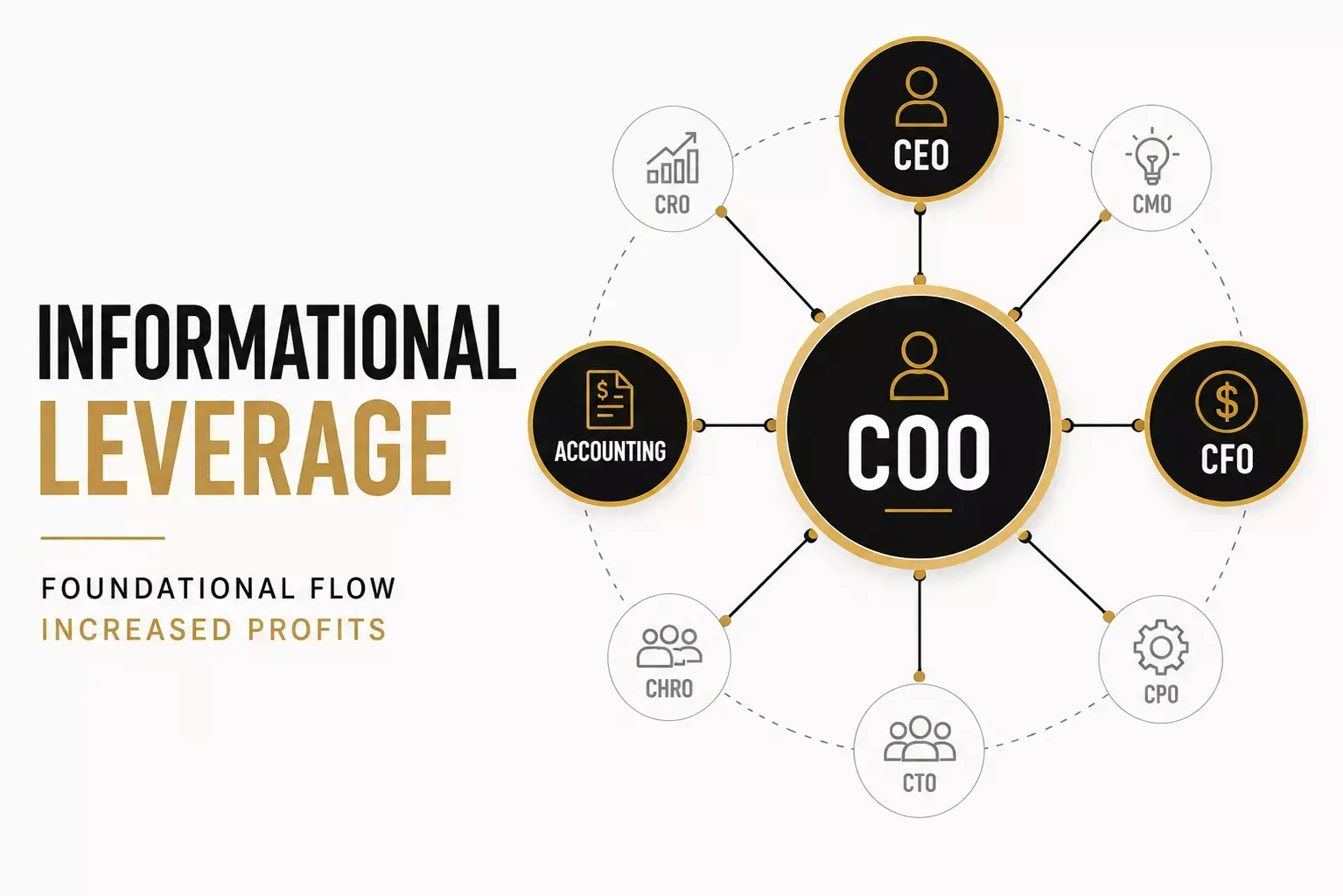
"Accounting is a stick in the mud." "I'm not really sure what a COO does all day." "The CFO just plays around with their little Excel sheets." You have probably heard one of those lines. You may have thought one yourself. They sound like harmless office humor. They actually point to something expensive. In most growing service businesses, nobody has ever defined how operations and accounting work together. The people who produce your financial reports sit outside the very decisions those reports are meant to inform. That gap costs you every single month, quietly, in profit that should have been there. Part 1 of a 5-part series on the COO and Accounting relationship

In modern business management, effective capacity planning requires far more than matching supply with demand—it demands a rigorous financial framework. Every unit of unused capacity represents sunk cost and margin erosion, while every unit of insufficient capacity risks churn and missed revenue. By evaluating capacity planning as a financial exercise, organizations can translate labor hours, utilization rates, and operational throughput into clear financial metrics like cost of goods sold (COGS) and return on invested capital (ROIC). This guide explores how to integrate operational capacity into your financial planning and analysis (FP&A) cycle to drive sustainable, cash-efficient scale.