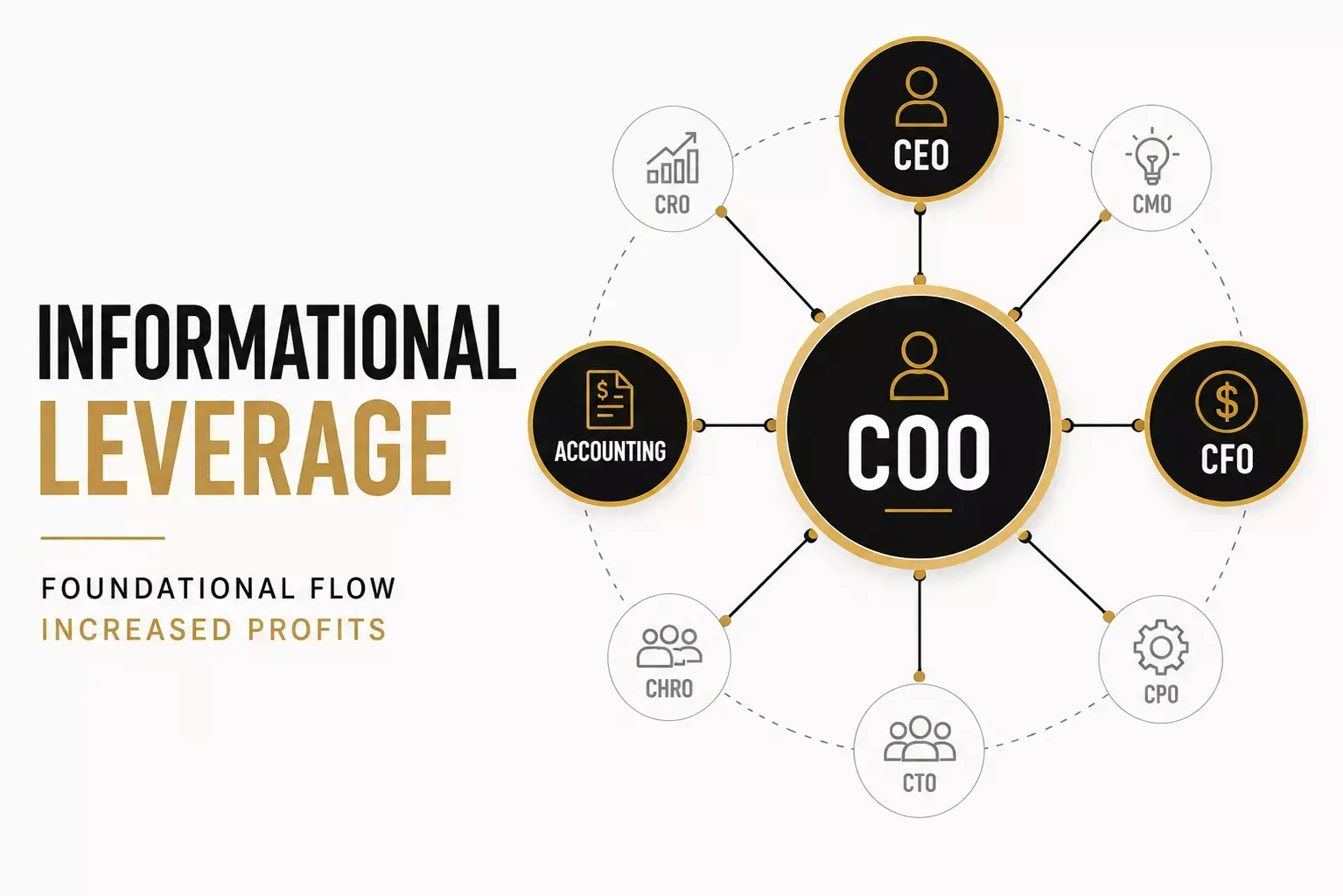

What Is Fractional Accounting? (And How It Can Help Your Business)
Fractional accounting gives your business a bookkeeper and controller for a flat monthly fee. Below you will find what it covers, what it costs, and how to know if it fits.

Table of Contents
- What is fractional accounting?
- How does fractional accounting work?
- Who is fractional accounting for?
- What does a fractional accounting team actually do?
- Bookkeeper or controller: which level do you need?
- Fractional accounting terms, explained in plain English
- Fractional accounting vs. your other options
- How much does fractional accounting cost?
- Seven signs your business has outgrown its current accounting setup
- What fractional accounting does not include
- What it's like to work with a fractional accounting team
- Frequently asked questions
- About First Steps Financial
1. What Is Fractional Accounting?
Fractional accounting is when a business hires an outside team to run its accounting function part time for a flat monthly fee. Instead of putting a full-time accountant on payroll, the company gets professional bookkeeping and controller-level oversight for only the hours it actually needs. The model is also called outsourced accounting or client accounting services.
New to accounting terminology? Jump to our plain English glossary of accounting terms.
The word "fractional" refers to time. You are buying a portion of an accounting department's hours each month, and the work itself meets the same standard a full-time team would deliver.
Here is why that matters for a business doing between $1 million and $5 million a year. At that size, the accounting work is real. Bank accounts have to be reconciled. Bills have to go out. Payroll has to run, sales tax has to be filed, and someone has to close the books every month and explain what the numbers actually mean. That is well beyond a few hours of data entry. It is also short of a full-time job for a $70,000 employee.
Most owners stuck in that gap end up doing one of three things. They do the books themselves at night and on weekends. They hire a part-time bookkeeper who can record transactions but cannot interpret them. Or they hire a full-time employee and pay for capacity they never use.
Fractional accounting is the fourth option. We become your accounting department. You get a trained team, a fixed monthly cost, and financial statements you can make real decisions from, without adding a single person to payroll.
At First Steps Financial, that team works at two levels. A bookkeeper handles the day-to-day recording and reconciling. A controller owns the month-end close, the reporting, and the oversight. Section 5 covers which level fits which business.
For most owners, the practical result is simple. The financial side of the business stops being the thing they lie awake thinking about.
2. How Does Fractional Accounting Work?
Fractional accounting works on a recurring monthly cycle. Transactions are recorded and reconciled throughout the month, the books are closed shortly after the month ends, and the business owner receives financial statements and a review meeting. Everything runs in cloud accounting software the owner can log into at any time.
There is no mystery to the process. Here is what actually happens.
Throughout the month
The day-to-day work never stops and never piles up. Every week we are categorizing transactions as they hit your accounts, matching them against your bank and credit card feeds, and flagging anything that looks wrong while it is still fresh enough to fix easily.
We also keep the money moving in both directions. Bills get entered and scheduled so vendors are paid on time. Invoices go out to your customers, and we track what is still owed and how long it has been outstanding. Payroll runs on schedule, and the payroll entries are recorded correctly in your books rather than sitting in a lump sum nobody can explain later.
At the end of the month
Once the month closes, we run the full close process:
- Reconcile every account. Every bank account, credit card, and loan gets matched line by line against the statement so the balances in your books equal the balances in the real world.
- Clear the exceptions. Anything uncategorized, duplicated, or sitting in a holding account gets researched and resolved.
- Record the entries that are not automatic. Depreciation, accruals, prepaid expenses, and loan interest all get posted so the month reflects what actually happened.
- Check the balance sheet. Every balance on it gets tied to something real. This is the step most books never receive, and it is the reason so many businesses find surprises at tax time.
- File what is due. Sales tax and payroll tax filings go out on schedule.
- Produce the statements. Profit and loss, balance sheet, and cash flow, delivered timely.
The review meeting
Statements only help if you understand them, so we sit down with you and go through them. We cover what changed, what stands out, and what to keep an eye on next month.
That meeting runs on your cadence. Some owners want to talk every month, some prefer quarterly, and some want more contact during a busy stretch or a growth push and less during a quiet one. You tell us what works, and we adjust when it stops working.
The software behind it
We run on QuickBooks Online, and we connect the rest of your systems into it so the information flows in one direction instead of living in five places at once. That usually includes your payroll platform, a bill pay and accounts payable tool, expense and receipt capture, and your point of sale or industry software if you use one.
You keep full access to everything. These are your books, your data, and your logins. We do the work inside them.
3. Who Is Fractional Accounting For?
Fractional accounting fits businesses that have outgrown do-it-yourself bookkeeping but do not yet need a full-time accountant on payroll. Most commonly that means companies doing between $1 million and $5 million in annual revenue, with employees on payroll, real accounts payable, and an owner who needs accurate monthly numbers to make decisions.
Revenue is the easiest way to describe the range, though complexity drives the decision more than size does. A $1.5 million business with one bank account and ten customers is simpler than an $800,000 business running payroll in three states with inventory and two entities.
The signals that usually point to fractional
Most of the owners who come to us recognize at least a few of these:
● You are doing the books yourself, after hours, and doing them last
● Your bookkeeper records transactions but cannot tell you what any of it means
● You have added employees, locations, or a second entity in the last year
● Your bank or a lender is asking for financial statements you do not have ready
● Your CPA sends questions every spring that take weeks to answer
● You are making decisions on your bank balance because the reports do not help
● The person handling your books left, and everything stopped
The industries we work with
We work across a range of industries, including professional services firms, nonprofits, construction and the trades, auto and equipment services, retail and e-commerce, restaurants and hospitality, healthcare practices, and more. The underlying accounting discipline travels well between them. What changes is the detail, like job costing for a contractor, grant tracking and restricted fund reporting for a nonprofit, inventory for a retailer, or tip and sales tax handling for a restaurant.
If you are earlier than this
If you are pre-revenue, still solo, or running under a few hundred thousand a year with simple finances, fractional accounting may be early for you. At that stage, clean software, disciplined habits, and a few hours of setup help will carry you a long way. Come back when the volume grows or the questions start getting harder to answer. We would rather tell you that now than sell you something you do not need yet.
Where we work
We work with businesses nationwide. The entire engagement runs remotely, which means your team is picked for skill rather than for the zip code it happens to sit in. Everything lives in the cloud, meetings happen by video, and your books are available to you from anywhere at any time.
4. What Does a Fractional Accounting Team Actually Do?
A fractional accounting team handles the full accounting function for a business: recording and reconciling transactions, paying bills, invoicing customers, running payroll, filing sales tax, closing the books each month, and producing financial statements. At the controller level, the team also builds budgets, forecasts cash, and reports on the metrics that drive the business.
Here is the work, grouped by what it does for you.
Bookkeeping and reconciliation
This is the foundation, and everything else depends on it being right. We record and categorize every transaction, maintain a chart of accounts that reflects how your business actually operates, and reconcile your bank accounts, credit cards, and loans every month so your books match reality. If your existing books are behind or full of errors, we clean them up before we start running them forward.
Accounts payable
We enter your bills, route them for your approval, and schedule payments so vendors are paid on time and nothing gets missed or paid twice. You keep final say over what goes out the door. We handle everything leading up to it, and the payments land in your books correctly instead of appearing as unexplained withdrawals.
Accounts receivable
We invoice your customers, apply payments as they come in, and track your aging so you can see who owes you what and how long it has been sitting. Getting paid faster is usually the cheapest source of cash a business has available.
Payroll
We process payroll on your schedule, make sure the wages, taxes, and benefit deductions are recorded properly in your books, and reconcile your payroll liability accounts so what you owe matches what your payroll provider says you owe. Multi-state payroll is where this gets messy fastest, and it is one of the most common problems we find in books we take over.
Sales tax and compliance
We prepare and file your sales tax returns on schedule and keep the underlying data clean enough that the filings are defensible if anyone ever asks. We also handle 1099 preparation at year end.
Month-end close and financial statements
Every month gets formally closed, which means reconciled, adjusted, reviewed, and locked. You receive a profit and loss statement, a balance sheet, and a cash flow statement, delivered timely, along with a walkthrough so you understand what you are reading.
Reporting, budgeting, and forecasting
At the controller level, the work extends past reporting history into planning ahead. That includes building an annual budget, comparing actual performance against it each month, forecasting cash so you can see a shortfall coming while there is still time to act, and tracking the handful of metrics that actually move your business. Section 5 covers this in more detail.
For nonprofit clients, this includes board-ready reporting: statements formatted and summarized so they can go straight into a board packet without you rebuilding them the weekend before the meeting.
Working with your CPA
We do not prepare or file income tax returns. That is your CPA's job, and it should stay that way.
What we do is make their job straightforward. We deliver clean, closed, reconciled books and the full supporting documentation your CPA needs to file, we answer their questions directly instead of routing everything through you, and we join tax planning meetings so the conversation is built on numbers that are current and correct. Tax strategy only works when the underlying records are accurate. Most of the value a good CPA offers gets lost when they are handed a shoebox in March.
Your accounting systems
We manage QuickBooks Online and the applications connected to it, including payroll, bill pay, expense capture, and your point of sale or industry software. When something needs to be added, integrated, or replaced as you grow, we handle the setup and the migration.
5. Bookkeeper or Controller: Which Level Do You Need?
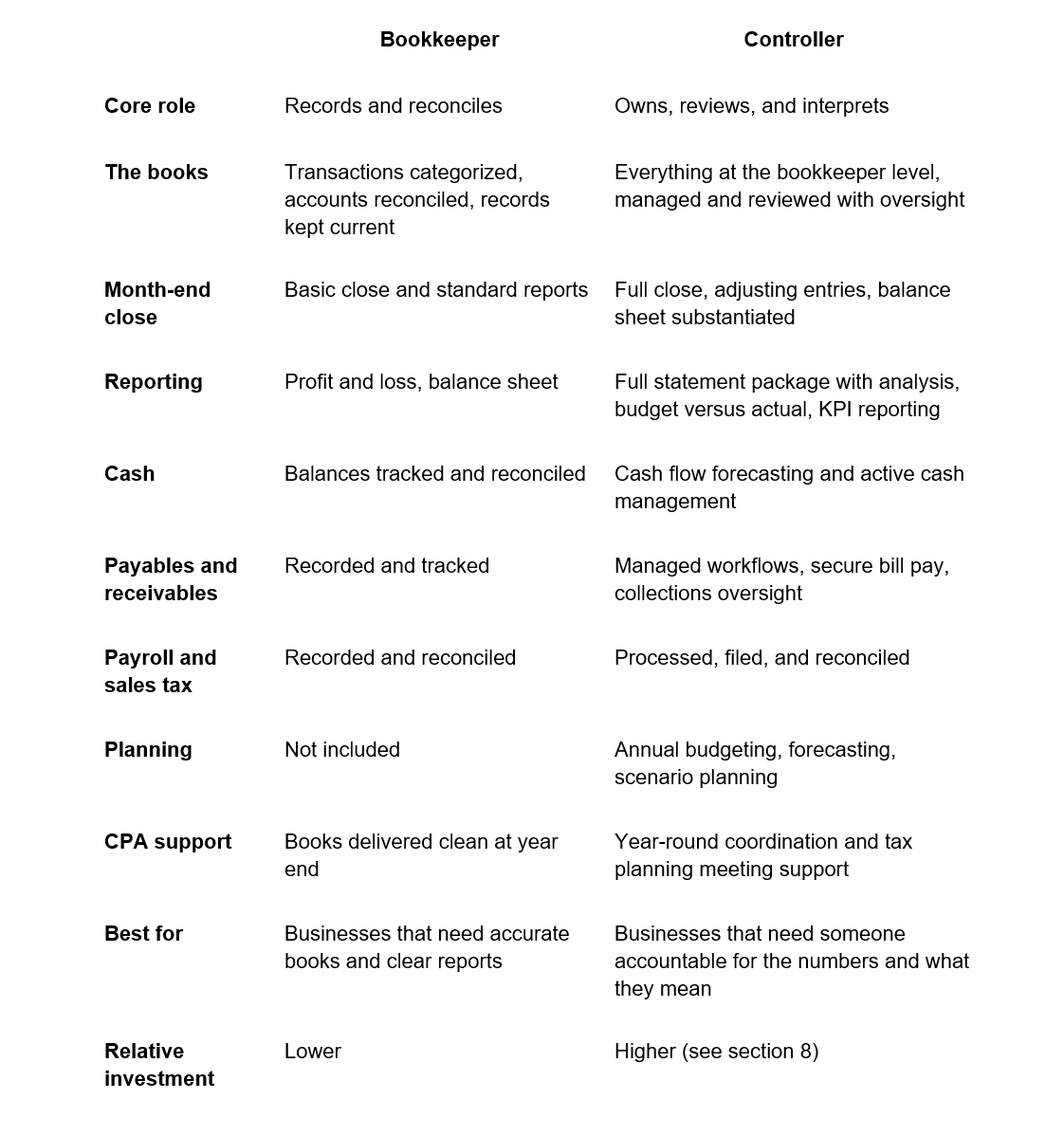
Fractional accounting is generally delivered at two levels. A bookkeeper records and reconciles what has already happened, keeping your books accurate and current. A controller owns the month-end close, the financial reporting, and the planning work built on top of it, including budgets, cash forecasting, and performance analysis. A controller engagement includes the bookkeeping work beneath it.
Most businesses start with a bookkeeper and move up to a controller as they grow. Some come to us needing a controller from day one, usually because they are already at scale, already complex, or already answering to a lender, a board, or a partner.
***See Bookkeeper/Controller chart at the bottom of this article.
Why the controller level includes the bookkeeping
Controller work is only as good as the records underneath it. A forecast built on unreconciled accounts is a guess with a chart attached, and a budget variance report means nothing when the actuals are wrong. When we take on a controller engagement, we own the day-to-day accounting as part of it, so there is one team accountable for the numbers from the first transaction through the final report.
How to tell which one you need
You probably need a bookkeeper if your books are behind or unreliable, you are still doing the categorizing yourself, and what you mainly want is accurate financials that show up on time without you chasing them.
You probably need a controller if your books are current but you still cannot answer basic questions from them, if you are planning a hire, a location, a loan, or a large purchase, if a lender or investor needs reporting from you, or if you have inventory, job costing, multiple entities, or payroll in more than one state.
When you are somewhere between the two, that is a good conversation to have on a call rather than a decision to make from a table.
You can read more about what each level includes on our fractional bookkeeping and fractional controller service pages.
6. Fractional Accounting Terms, Explained in Plain English
These are the terms that come up most often in accounting conversations. None of them are complicated once someone spells them out, and knowing them makes it much easier to tell whether the person handling your books is doing the job well.
Accounts payable (AP). The money your business owes to vendors and suppliers but has not paid yet. Watching AP tells you what obligations are coming, so a healthy bank balance today does not fool you into spending money that is already committed.
Accounts receivable (AR). The money your customers owe you but have not paid yet. Every dollar sitting in AR is revenue you have earned and cannot spend, which is why slow collections strangle profitable businesses.
Accrual basis and cash basis. Two methods of recording activity. Cash basis records income and expenses when money actually moves. Accrual basis records them when they are earned or incurred, regardless of payment timing, which gives a far more accurate picture of whether a given month was genuinely profitable.
Aging report. A breakdown of unpaid invoices or bills sorted by how long they have been outstanding, usually in 30, 60, and 90 day buckets. It is the fastest way to spot a collections problem before it becomes a cash problem.
Balance sheet. A snapshot of what your business owns, what it owes, and what is left over for the owner at a single point in time. Lenders read this before they read anything else.
Bookkeeper. The person or team responsible for recording and reconciling your financial activity accurately and on time. Strong bookkeeping is the foundation every other financial function is built on.
Budget versus actual. A report comparing what you planned to spend and earn against what actually happened. The gaps are where the useful conversations start.
Cash flow statement. A report showing where cash actually came from and where it went during a period. It explains the single most common question owners ask, which is why the profit and loss shows a good month while the bank account says otherwise.
Chart of accounts. The organized list of categories your transactions get sorted into. A chart of accounts built around how your business actually operates produces reports you can use, and a generic one produces reports nobody opens twice.
Client accounting and advisory services (CAAS). The industry term for the full outsourced accounting model, covering bookkeeping, controller work, and advisory support delivered as an ongoing service. Fractional accounting is the plain-language version of the same idea.
Controller. The person or team accountable for the accuracy of your financial reporting and for what the numbers mean. A controller owns the close, reviews the work beneath it, and translates results into decisions.
Cost of goods sold (COGS). The direct cost of producing what you sell, including materials and direct labor. Separating COGS from overhead correctly is what makes gross margin meaningful, and gross margin is usually the number that tells you whether the business model works.
Forecast. A forward-looking projection of revenue, expenses, and cash based on current data and reasonable assumptions. A forecast lets you see a shortfall while you still have time to do something about it.
Fractional. Part-time and shared. A fractional professional works with several businesses, so each one gets senior-level skill for a portion of the cost of employing that person outright.
Fractional CFO. A part-time chief financial officer focused on strategy, capital, and long-range planning. Most businesses under $5 million in revenue need reliable controller-level reporting before CFO strategy becomes useful.
General ledger. The complete record of every transaction the business has posted, organized by account. Every report you receive is built from it, which is why errors here spread everywhere.
Job costing. Tracking revenue and costs by individual project, job, or contract. Contractors and service businesses need this to know which work is actually making money, because a profitable year can easily hide unprofitable jobs.
Journal entry. A manual posting to your books to record something the bank feed cannot capture on its own, like depreciation, accruals, or corrections. Necessary in every set of books, and worth understanding because unexplained entries are a common warning sign.
Key performance indicator (KPI). A small number of measures that tell you how the business is performing, chosen because they actually drive results. Three KPIs reviewed monthly beat thirty that get ignored.
Month-end close. The process of finalizing a month's books: reconciling accounts, posting adjustments, reviewing the balance sheet, and producing statements. A closed month is finished and reliable, and books that are never formally closed are books nobody should be making decisions from.
Profit and loss statement (P&L). A report showing revenue, expenses, and profit over a period. It answers whether you made money, and a well-structured one also shows you where.
Reconciliation. Matching your books line by line against an outside statement, like a bank or credit card statement, until the balances agree. Unreconciled books are the most common problem we find when taking over an existing set, and everything downstream of them is unreliable.
7. Fractional Accounting vs. Your Other Options
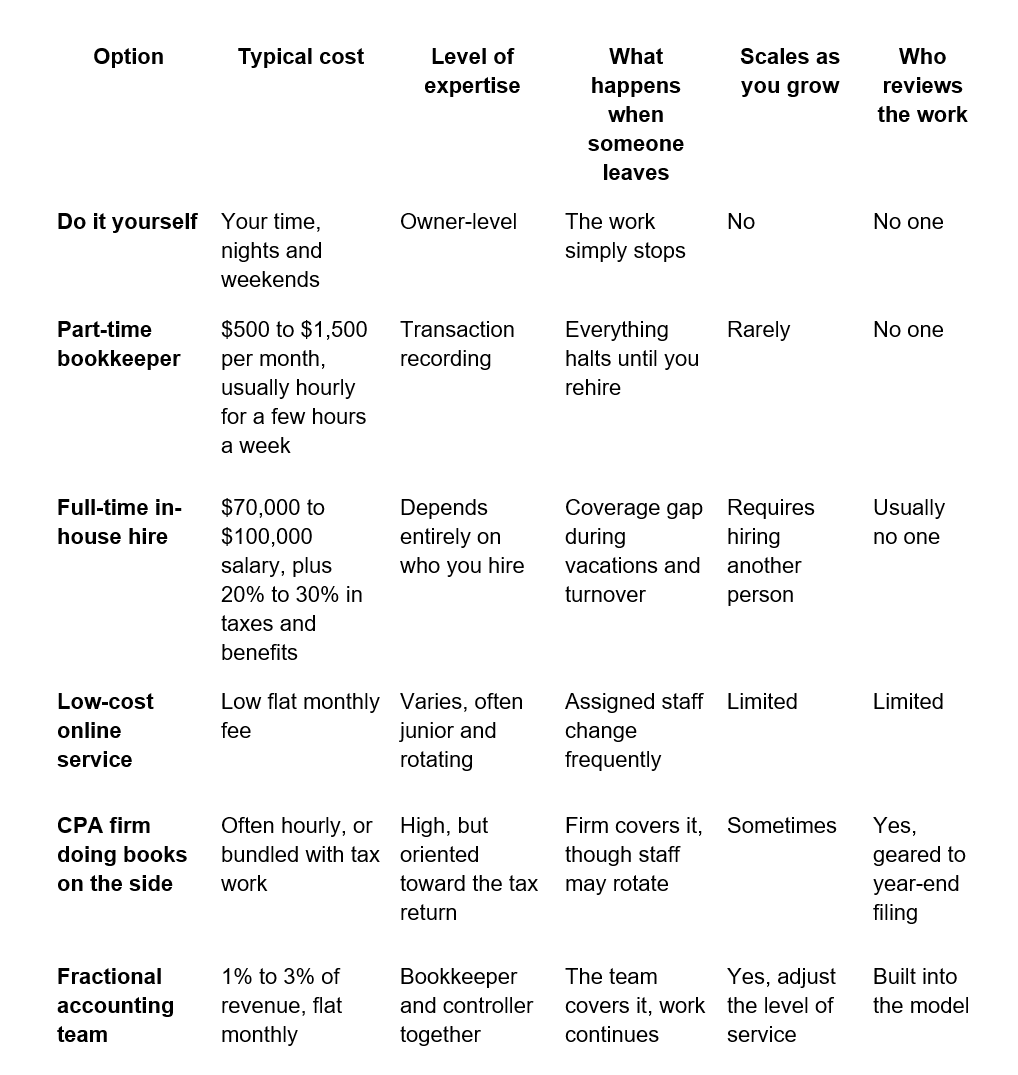
Most businesses choose between six approaches to accounting: doing it themselves, hiring a part-time bookkeeper, hiring a full-time employee, using a low-cost national online service, having their CPA firm keep the books alongside tax work, or working with a fractional accounting team. They differ in cost, in the level of expertise you get, and in whether anyon is reviewing the work.
***See "Options" chart at the bottom of this article.
Doing it yourself
Every business starts here, and for a while it works fine. The trouble arrives quietly. The books become the thing that gets done last, then late, then not at all, and by the time you need clean numbers for a loan or a decision, catching up takes weeks. The real cost is measured in hours. Time spent on categorization is time taken from the work only you can do.
The part-time bookkeeper
A good bookkeeper keeps your records accurate, and that has genuine value. The limit is usually one of hours and scope. Most part-time bookkeepers work a handful of hours a week or even a month, billed hourly, which buys you transaction recording and very little else. Recording what happened and interpreting what it means are different skills, and most bookkeepers are hired for the first one.
You are also relying on one person with no backup. When they get sick, take a vacation, or move on, your accounting stops entirely and you are recruiting while your books go stale.
The full-time in-house hire
This is the option people compare us to most often, and the comparison usually gets made on the wrong number. Depending on experience, a full-time accountant runs $70,000 to $100,000 in salary, and salary is only part of it. Employer payroll taxes, health insurance, the retirement match, paid time off, software licenses, equipment, and recruiting add roughly 20% to 30% on top, which puts a $70,000 hire near $90,000 and a $100,000 hire well past $120,000. That assumes the person stays.
You also get one person's skill set. A bookkeeper you hire at that salary will not deliver controller-level analysis, and a controller you hire at that salary will spend most of the week on data entry.
The low-cost national online service
These providers advertise a low monthly fee, and for a very simple business the price can make sense. What gets left out is worth understanding. Your account typically moves between rotating staff, so nobody builds familiarity with how your business works. The work is usually transaction categorization with no controller reviewing it. Support runs through a ticket queue rather than a person who knows your name. And when something unusual shows up in your numbers, catching it requires someone who knows what normal looks like for you.
Your CPA firm doing the books on the side
Plenty of CPA firms offer bookkeeping alongside tax work, and the accuracy is generally sound. The issue is what the books are being produced for.
A tax-focused firm prepares your books in service of the year-end return. Their goal is having the information ready and defensible at filing time, which means the work often gets attention in cycles tied to tax deadlines rather than to your operating calendar. That is a reasonable priority for a tax practice, and a poor fit for an owner who needs to know in early February how January went.
Fractional accounting is built around the operating calendar instead. The books get closed monthly because you need current information to run the business, and the year-end filing becomes a byproduct of work that was already done correctly along the way.
When doing it yourself is genuinely the right call
If you are running a solo business under a few hundred thousand a year, with one bank account, no employees, and straightforward transactions, you probably do not need us yet. Set up your software properly, reconcile every month without fail, and lean on the resources around you. Business owner groups, industry forums, and other owners a few years ahead of you can answer most questions at that stage. Hire help when the volume grows or when the questions start costing you more time than the work does.
What about larger companies?
There is a common assumption that every business eventually outgrows fractional accounting and brings it in house. In practice, the opposite argument gets stronger as revenue climbs.
At $20 million, you are not replacing us with one employee. You need someone recording transactions, someone managing payables and receivables, and a controller above them, which is a department carrying $250,000 or more in fully loaded payroll before anyone has produced a single report. You also own the hiring, the management, the turnover, and the coverage problems that come with it.
Larger companies also face more scrutiny. Audits, reviews, lender covenants, and investor reporting all become more common as revenue grows, and all of them demand documented processes, proper segregation of duties, and clean support that can withstand outside examination. That is standard practice for a fractional accounting firm and a heavy lift for a small internal team. Working with a fractional team means the discipline is already in place when someone asks to see it.
8. How Much Does Fractional Accounting Cost?
Fractional accounting is typically priced as a flat monthly fee, usually between 1% and 3% of a company's top line revenue. Where a business lands in that range depends on scope. Bookkeeping-only engagements sit at the lower end, and full controller engagements covering payables, receivables, payroll oversight, and cash management sit at the upper end. Engagements generally start at $2,500 per month.
There are no hourly bills, no surprise invoices, and no charges for picking up the phone. You know the number before the month starts, and it does not move because you had a busy quarter or asked more questions than usual.
The comparison that actually matters
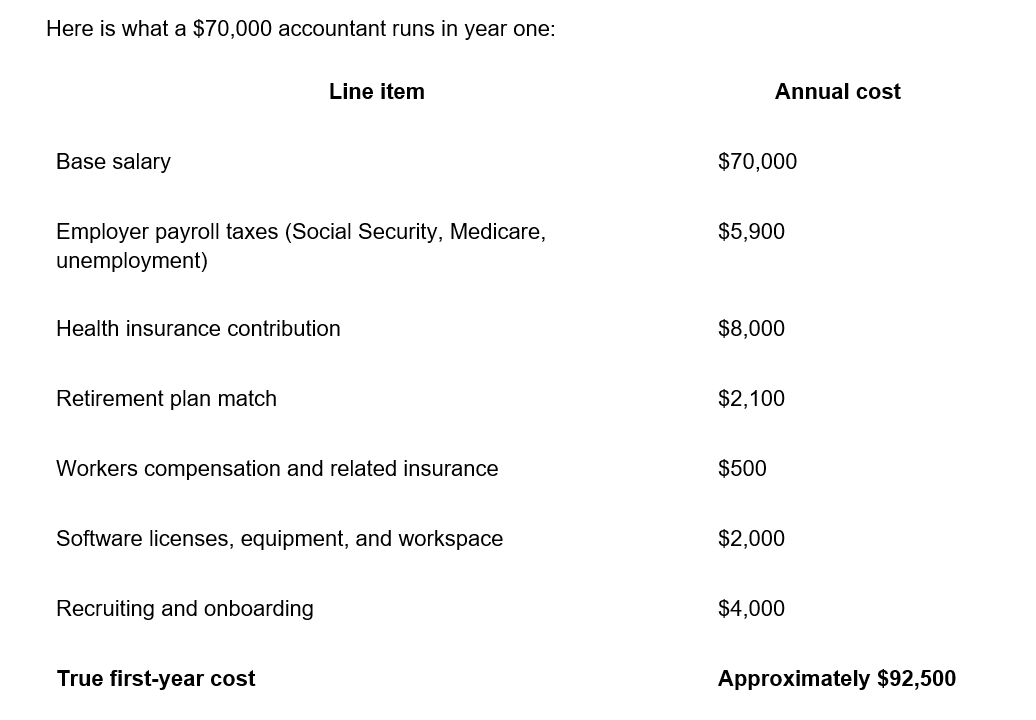
Most owners weigh this against hiring someone. That comparison goes wrong when salary is treated as the cost of an employee, because salary is roughly three quarters of what an employee actually costs.
*** See Employee Salary Example chart at the bottom of this article.
That $92,500 buys roughly 47 working weeks once holidays and paid time off come out. It also buys one person's skill set. Hire at the bookkeeper level and you will not get controller analysis. Hire at the controller level and you will pay someone senior to categorize receipts. And if that person leaves in March, you are paying recruiting costs again while your books sit untouched.
What a fractional engagement looks like at the same size
For a company with $2.5 million in top line revenue, a complete controller-level engagement runs approximately $73,000 per year. That covers the full scope:
● All day-to-day bookkeeping, categorization, and record keeping
● Bank and credit card reconciliations
● Credit card and expense tracking
● Accounts payable, from bill entry through scheduled payment
● Accounts receivable, invoicing, and collections tracking
● Bimonthly payroll oversight
● Cash flow management
● Full month-end close every month
● Monthly financial statements and review
● Controller-level oversight of all of it
Why $73,000 beats $92,500
The difference in the raw numbers is real, and it is the smaller part of the story.
You are not adding an employee. There is no employer portion of payroll taxes to remit, no health plan to administer or renew, no 401(k) to sponsor and audit, no workers compensation, no paid time off to fund, no unemployment claim if things change, and no recruiter's fee. You are buying a service at a flat rate, and the rate is the whole cost.
You are also getting more than one person. A bookkeeper handles the daily work and a controller reviews it and owns the reporting. Building that mix in house means two hires, and two hires at $2.5 million in revenue creates a payroll burden most businesses that size cannot carry.
And the work does not stop. Nobody on our side going on vacation means your reconciliations wait. The team covers itself, which is something no single employee can do.
How we set your price
We look at your revenue, your transaction volume, how many bank and credit card accounts you carry, whether you run payroll and in how many states, whether you need accounts payable and receivable managed or only recorded, and how complex your reporting needs to be. Then we quote one number for the ongoing monthly work.
If your business changes enough that the scope changes, we talk about it before anything on your invoice does.
Cleanup and catch-up work
If your books are behind, incomplete, or need correcting before we can run them forward, that work is quoted separately as a one-time project. It is priced on its own and does not get buried in your monthly fee.
We handle it this way for a straightforward reason. Cleanup is finite work with a defined end, and folding it into a recurring rate would mean charging you for it long after it was finished. You get a fixed price for the cleanup and a separate ongoing rate for everything after.
While their services may seem like a significant investment at first, the FSF team has more than justified the cost through the value they provide, the time they save us, and the confidence they give us as we operate our business.
9. Seven Signs Your Business Has Outgrown Its Current Accounting Setup
Most businesses change their accounting setup only after hitting a breaking point. These are the seven signals that usually show up first, and any two of them together are worth taking seriously.
1. The books turned into somebody's second job, and the job outgrew them
This is the most common one we hear. Either you have been handling the books yourself in the evenings, or the person directly beneath you picked it up as a side task back when it was a couple of hours a week. The business grew. The side task grew with it. Now it is a real job being done by someone who was hired to do something else entirely.
What it costs you: two jobs done at partial strength. The accounting slips because it is nobody's priority, and the work that person was actually hired for slips because the accounting keeps interrupting it.
2. You ask a question and nobody can answer it
You want to know why margins dropped, whether you can afford a hire, or what happened to the cash. You ask, and the answer is a shrug, a spreadsheet, or a promise to look into it. Sometimes you are not even sure who to ask.
What it costs you: you make the decision anyway, on instinct, without the information. Occasionally that works out. Over a few years, it does not.
3. Your numbers show up too late to be useful
March closes and you see the results in May. By then the month is ancient history and anything you might have fixed has already compounded into the next quarter.
What it costs you: the ability to correct anything. Financial statements are a steering wheel when they are current and a rearview mirror when they are late.
4. You are running the business off your bank balance
You check the account to decide whether you can spend. The balance looks healthy, so the answer is yes, and nobody has accounted for the payroll run, the sales tax payment, and the vendor bills all landing next week.
What it costs you: cash surprises that were entirely predictable, and decisions sized to your balance instead of to your actual position.
5. Tax time is a scramble every single year
Every spring your CPA asks for documentation, and every spring it takes weeks to assemble because the year was never closed properly along the way.
What it costs you: your time, extra fees while your CPA cleans up records instead of doing tax work, and any planning opportunity that needed to be acted on before December.
6. The business got noticeably more complicated in the last year
You added employees, opened a location, started running payroll in a second state, launched a new revenue line, took on inventory, or set up a second entity.
What it costs you: compliance exposure and blind spots. Each of those changes adds accounting requirements, and the setup that handled the simpler version of your business does not automatically stretch to cover them.
7. Someone outside your business is asking for financials you do not have
A bank wants statements for a loan. A landlord wants them for a lease. An investor, a partner, a franchisor, or an acquirer wants to see the numbers, and you cannot produce anything you would be comfortable handing over.
What it costs you: the opportunity itself, sometimes. Deals stall while books get reconstructed, and reconstructed books get scrutinized harder than maintained ones.
If several of these sound familiar
None of these mean anything has gone wrong. They mean the business outgrew the system that used to fit it, which is what growth does. The fix is a setup built for the size you are now.
10. What Fractional Accounting Does Not Include
Fractional accounting covers your bookkeeping, controller work, reporting, and day-to-day financial operations. It does not include income tax preparation, audit or attestation work, investment advice, or legal advice. Those are separate professional services, and a good fractional accounting team works alongside the specialists who provide them.
Knowing where the lines fall protects you. Here is what sits outside our scope and who handles it instead.
Income tax preparation and filing
Who handles it: your CPA or tax preparer.
We do not prepare or file income tax returns. What we do is make that work easier and cheaper. Your CPA receives books that are already closed, reconciled, and documented, along with the supporting detail they ask for. We answer their questions directly rather than forwarding them to you, and we join tax planning conversations so the strategy is built on current numbers.
The most expensive tax preparation is the kind that starts with a year of cleanup. That is the version we eliminate.
Audits, reviews, and compilations
Who handles it: a licensed CPA firm.
Attestation work has to be performed by an independent licensed firm, and independence is the entire point. A firm cannot audit books it maintains.
What we do is get you through it. That means assembling the documentation the auditors request, preparing the schedules and reconciliations they need, answering their questions as they come up, and managing the back and forth so it does not land on your desk.
Audits go badly when records are disorganized and the person who understands them is unavailable. Maintained books and a responsive team turn an audit into a process instead of an emergency.
Investment and wealth management advice
Who handles it: a licensed financial advisor.
We do not advise on investments, retirement products, or personal wealth strategy. We do give your advisor an accurate picture of the business, which is usually the largest item on a business owner's personal balance sheet and the hardest one for an outside advisor to see clearly.
Legal advice
Who handles it: your attorney.
Entity structure, contracts, employment matters, and disputes are legal questions. We work with your attorney and provide whatever financial records and analysis they need.
Business valuation
Who handles it: a credentialed valuation professional.
We do not issue formal valuations. When you are selling, buying, bringing in a partner, or planning a transition, we supply the clean historical financials the valuation is built from, which is generally the first thing anyone asks for.
One thing worth stating plainly
First Steps Financial is not a CPA firm. Bookkeeping, controller work, financial reporting, and advisory support do not require a CPA license, and those are the services we provide. Tax filing and attestation do require one, which is exactly why we keep those with your CPA and focus on making their work faster and more accurate.
You end up with specialists in each role and one team making sure the information moves cleanly between them.
Who we work for
Every professional named on this page has a role, and we coordinate with all of them. It is worth being clear about where our obligation sits.
We work for you. Not for your CPA, your lender, your auditor, or anyone else requesting information about your business. When we are assembling documentation for an audit, answering a lender's questions, or supporting your tax planning, we are representing your interests in that exchange.
That means giving every outside party accurate, complete, well-documented information, because that is what actually serves you. It also means you have someone in the room who is thinking about your position, your time, and your business rather than about closing out a file. You should not have to manage those relationships alone, and with us you do not.
11. What It's Like to Work With a Fractional Accounting Team
Working with a fractional accounting team means having one dedicated point of contact who knows your business, backed by a full team behind them. Questions get answered within 24 hours. You are never waiting on a single person, and you always know who to ask.
Everything above this section describes the mechanics. This part is about what actually changes day to day, and for most owners it is the part that mattered more than they expected.
You know exactly who to ask
You have one dedicated point of contact, a person rather than a ticket queue or a general inbox, and they know your business, your history, and what you asked about last month.
That sounds small until you have lived without it. Plenty of owners have someone handling their books and still have no idea who to bring a question to, because the person doing the work cannot answer it and the person who could is not involved.
You get an answer within 24 hours
Every question gets a response within one business day. That is a commitment we hold ourselves to.
The reason it matters has nothing to do with speed for its own sake. Decisions do not wait. When you need to know whether you can make a hire, take on a contract, or handle an unexpected expense, an answer next week is the same as no answer at all. A 24-hour turnaround means your accounting keeps pace with your business instead of trailing it.
There is a team behind your point of contact
Your contact is your relationship. The work behind them is done by a team of specialists.
That matters for two reasons. Your question reaches whoever actually knows the answer, whether it involves payroll in a second state, a sales tax question, or how to structure reporting for a lender. And the work never stops for a vacation, an illness, or a resignation. A single bookkeeper is a single point of failure. A team is not.
The answers come from people who know your business
Generic answers are easy to find. Answers that account for how your business actually operates require someone who has been inside your numbers every month.
That familiarity is also what makes proactive work possible. A team that knows your books notices when something looks off before it becomes a problem, and spots opportunities to improve how things run. Migrating a payroll system, restructuring how costs get tracked, building a process that did not exist before. Projects that feel overwhelming to take on alone become manageable when the people running them already understand your business.
What clients say
What stands out most is their responsiveness and professionalism. Every question is answered promptly, and every interaction leaves us feeling supported. We don't take that for granted, especially after two disappointing experiences with previous accountants.
What it adds up to
Confidence. You stop wondering whether the books are right. You stop putting off questions because asking is a hassle. You stop finding out about problems in April that started in January.
The financial side of your business becomes something handled rather than something hanging over you, and that is worth more to most owners than any single line item on a service list.
12. Frequently Asked Questions About Fractional Accounting
What is fractional accounting? Fractional accounting is when a business hires an outside team to run its accounting function part time for a flat monthly fee, instead of putting a full-time accountant on payroll. It covers bookkeeping, month-end close, financial reporting, and controller-level oversight. It is also called outsourced accounting or client accounting services.
How much does fractional accounting cost? Most engagements run between 1% and 3% of annual top line revenue, billed as a flat monthly fee. Engagements generally start at $2,500 per month. Where you land depends on scope, transaction volume, payroll complexity, and how much of your payables and receivables you want managed rather than just recorded.
Is fractional accounting cheaper than hiring someone? Usually, and the gap is wider than salary alone suggests. A $70,000 accountant costs roughly $92,500 in year one once payroll taxes, health insurance, retirement match, equipment, and recruiting are included. A fractional engagement is one flat fee with none of those attached, and it gives you both a bookkeeper and a controller rather than one person.
What is the difference between a bookkeeper and a controller? A bookkeeper records and reconciles what has already happened, keeping your books accurate and current. A controller owns the month-end close, the financial reporting, and the planning work built on top of it, including budgets and cash flow forecasting. A controller engagement includes the bookkeeping work underneath it.
Do you prepare and file my taxes? No. Income tax preparation and filing stay with your CPA. We deliver closed, reconciled books and the supporting documentation your CPA needs, answer their questions directly, and join tax planning meetings so the strategy is built on current numbers.
Do I still need a CPA? Yes, for tax filing, and for audit or attestation work if your business requires it. Fractional accounting handles the ongoing accounting function that sits underneath all of that. Most clients find their CPA relationship gets cheaper and less stressful once the books arrive clean.
Do I keep access to my own books? Always. The accounting file, the bank connections, and every application in the stack belong to you, and you retain full access at all times. We work inside your systems, not in a black box you have to ask permission to see.
What if my books are behind or a mess? That is one of the most common situations we walk into, and it does not disqualify you. Cleanup and catch-up work is quoted separately as a one-time project with a defined scope and a fixed price, then the ongoing monthly engagement starts from clean records.
What happens to my current bookkeeper? That depends on what you want. Some owners are replacing someone who left or is stretched too thin. Others keep a person in place for administrative work while we take over the accounting. We will tell you honestly what we think makes sense for your situation.
How long does onboarding take? Full onboarding typically takes 60 to 90 days. We start by working inside the systems you already have in place rather than forcing a rebuild on day one, so nothing breaks while we learn how your business actually runs. As we go, we document what we find and recommend the changes and efficiencies worth making. By the end of the window, your accounting is running on a consistent monthly rhythm and you have a clear picture of what we improved and why.
Am I locked into a long-term contract? No. The engagement is month to month, and you can end it whenever you decide to. There is no term commitment and no cancellation penalty. If you do leave, you take everything with you, including every process and piece of documentation we built for your business. Those were created for your company, so they belong to your company.
What software will I need to use? We run on QuickBooks Online and connect the rest of your systems into it, including payroll, bill pay, expense capture, and your point of sale or industry software. If you are on a different platform, we will tell you honestly whether migrating is worth it for your situation.
Do you work with businesses outside your area? Yes. We work with businesses nationwide and the entire engagement runs remotely. Meetings happen by video, your books live in the cloud, and you can reach your team from anywhere.
How do I know if I'm ready for fractional accounting? If your books are consistently behind, if you cannot get answers to basic financial questions, if the accounting has become somebody's overloaded second job, or if a lender or investor is asking for statements you cannot produce, you are ready. A short conversation will tell you more than any checklist.
13. About First Steps Financial
First Steps Financial is a women-founded fractional accounting firm serving businesses nationwide. We started in Princeton, New Jersey and operate as a fully remote team. For 14 years we have provided bookkeeping, controller services, and financial reporting to hundreds of clients as their accounting department.
In 2023, First Steps Financial was named one of the inaugural Empowering Women Honorees by NJBIZ, a program recognizing organizations committed to supporting and elevating women in New Jersey.
We built this firm around a specific problem. Business owners were being handed two bad options: hire someone full time before the workload justified it, or keep patching the accounting together with part-time help that could record transactions but never answer a question. Neither one gives an owner what they actually need, which is accurate books, current numbers, and someone accountable for both.
Our model is straightforward. You get a dedicated point of contact who knows your business, a team of specialists behind them, a flat monthly fee with no hourly billing, and a response to every question within 24 hours. We work inside your systems, we document what we build, and everything we create for your business belongs to your business.
We are not a CPA firm, and we do not want to be. Your CPA handles your taxes, and we make sure they receive books worth working from.
I would wholeheartedly recommend First Steps Financial to any business owner looking for an accounting team that is knowledgeable, proactive, and truly feels like an extension of your business.
We also host regular webinars for business owners with expert guest speakers, covering leadership, management, financial forecasting, and strategic planning. Follow First Steps Financial on LinkedIn to see what is coming up next.
Let's talk about your business
The next step is a conversation.
Book a call and we will talk through where your accounting stands now, what is working, and what is causing you problems. If fractional accounting fits your situation, we will tell you what it would look like and what it would cost. If it does not, we will tell you that as well, along with what we think you should do instead.
You are also welcome to book a call just to ask a question. If there is something about your books, your reporting, or your setup you have been trying to figure out, ask us. We will give you a straight answer whether or not you ever become a client.
Book a call with First Steps Financial
Our Latest Insight