

Protecting Your Investment: What to Consider Before You Sign a Small Business Partnership Agreement
Entering a partnership can feel like a major milestone. Shared vision, combined skills, and pooled resources often promise faster progress. Yet enthusiasm alone does not protect your investment. A well-structured business partnership agreement sets expectations early and reduces confusion later, especially when money, responsibility, and authority intersect.
Before signing anything, it helps to pause and examine how the arrangement will work in practice. Clear planning now can prevent strain and preserve trust down the road.
Before signing anything, it helps to pause and examine how the arrangement will work in practice. Clear planning now can prevent strain and preserve trust down the road.

Defining Roles, Authority, and Accountability
Partnerships struggle most when responsibilities overlap or remain vague. Each participant should understand their scope of authority, operational duties, and decision-making rights.
Consider how daily choices will be handled. Determine who oversees operations, who manages finances, and who represents the organization externally. Clarity supports efficiency and reduces friction.
Written definitions also help when circumstances change. Growth, staff additions, or market shifts can test informal arrangements, while documented expectations provide stability.
Capital Contributions and Ongoing Commitments
Money is often the most sensitive topic in any business partnership agreement. Initial contributions should be clearly documented, including cash, assets, or services provided at the start.
Equally important is understanding future commitments. Decide how additional funding
needs will be handled. Will partners contribute proportionally, seek outside financing, or pause expansion plans?
Addressing these questions upfront avoids resentment and protects working relationships. Transparency around financial considerations builds confidence and aligns priorities.
Profit Sharing, Draws, and Cash Flow Planning
Sharing profits seems simple until timing and distribution enter the conversation. Agreements should outline how earnings are allocated, when distributions occur, and what happens during lean periods.
It is also wise to distinguish between compensation for active involvement and returns on ownership. Mixing the two can cloud performance discussions and strain cash availability. Clear policies help ensure stability, especially when one partner depends more heavily on income from the organization than another.
Exit Paths and Conflict Resolution
Even strong partnerships can change over time. Planning for exits does not signal mistrust. It reflects foresight. Outline how ownership transfers occur, how valuations are determined, and what triggers a buyout. Include processes for resolving disputes without disrupting operations.
Having a roadmap for difficult scenarios protects both the investment and the people involved.
Turning Planning Into Financial Clarity
A strong business partnership agreement is more than a legal formality; it's an investment in your business's future and the relationship at its core. The effort you invest in planning now pays dividends through smoother operations, fewer misunderstandings, and stronger trust between partners. However, partnership agreements don't exist in a vacuum. They need to align with your actual financial realities: cash flow patterns, equity structures, and long-term sustainability goals.
At First Steps Financial, we help businesses gain financial clarity through fractional bookkeeping and financial consultation services. We’ll navigate the numbers so you can focus on running your business and building a solid partnership. Let's connect.
Our Latest Insight

Article 2 ended with a question. What would you actually see first if this relationship started breaking down inside your business? Here is the answer. You would see five things. If you are like most owners reading this, you are already looking at two or three of them. None of the five announces itself as a communication problem. Each one shows up as friction inside your accounting systems, wearing a perfectly reasonable disguise. That is the difficulty. On the surface, none of these looks like a broken relationship. Each looks like something else entirely. A busy month. A tough quarter. A personality difference between two people who were never going to be friends anyway. Every one of them gets explained away the first time you see it. That is exactly what makes them expensive. This article does not fix any of it. Article 4 does that. The job here is naming what is already sitting in front of you. Most owners walk past these signs for years without recognizing what they are looking at. Part 3 of a 5-part series on the COO-Accounting relationship

Article 1 ended with a question. When does your COO actually talk to Accounting before a decision gets made? How long did it take you to answer? Immediately? Minutes? Maybe you could not think of a single example. Bills get paid, projects keep moving, and financial reports show up. Nothing feels obviously broken, so you conclude everything is fine. If that question made you uncomfortable, you are not alone. Here is the part that keeps this problem alive. You only know what good looks like based on what you have already lived through. Most owners have never worked inside a business where Operations and Accounting were intentionally built to function together. So they measure their company against their own status quo. This article gives you a different reference point. You will see what the relationship looks like day to day, what rhythm it runs on, and five things you can check this week. None of it requires scrapping what you have built. The people are already in the building. The data already exists. What changes is how the pieces are arranged, and how much leverage you get out of the company you have right now. Part 2 of a 5-part series on the COO-Accounting relationship
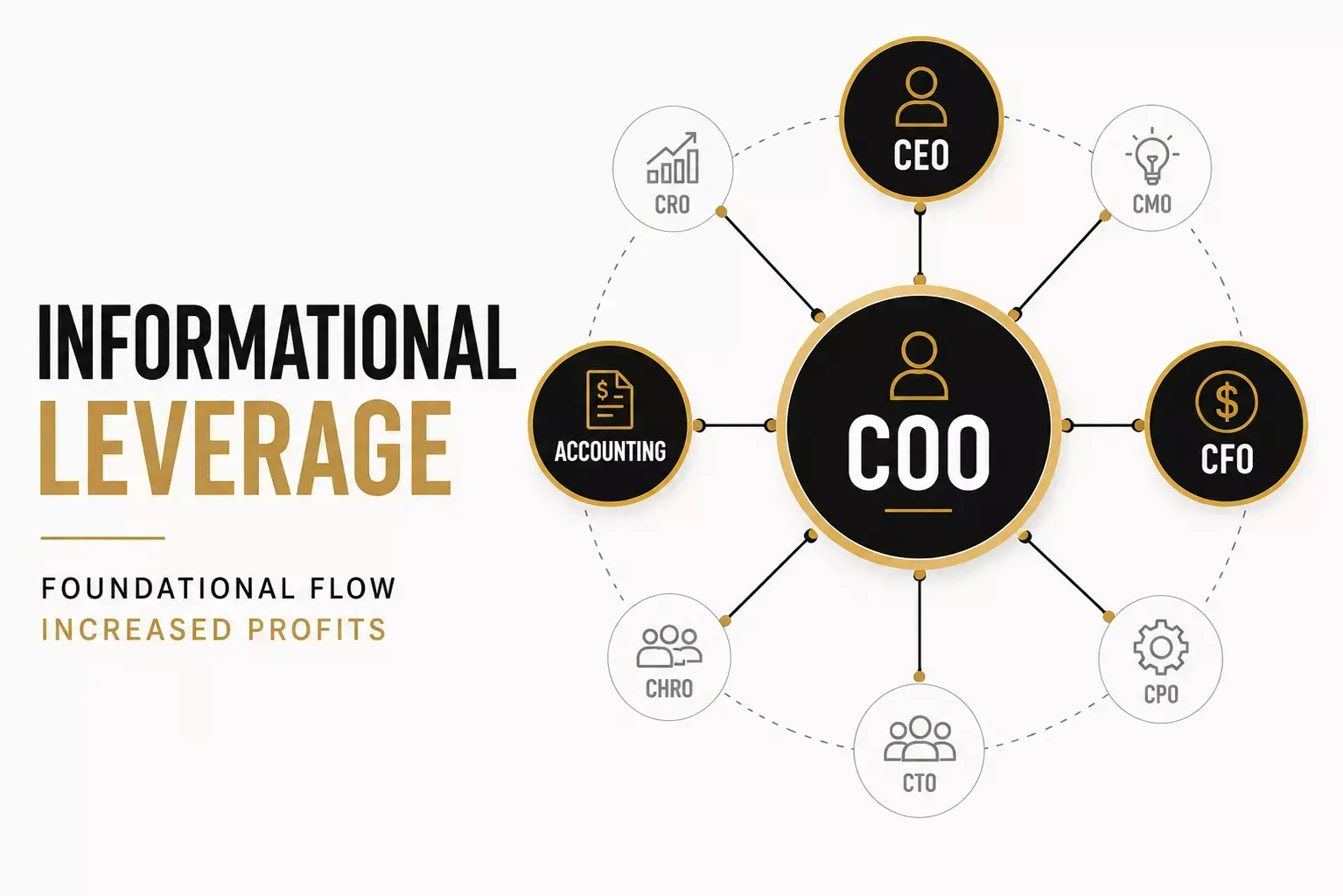
"Accounting is a stick in the mud." "I'm not really sure what a COO does all day." "The CFO just plays around with their little Excel sheets." You have probably heard one of those lines. You may have thought one yourself. They sound like harmless office humor. They actually point to something expensive. In most growing service businesses, nobody has ever defined how operations and accounting work together. The people who produce your financial reports sit outside the very decisions those reports are meant to inform. That gap costs you every single month, quietly, in profit that should have been there. Part 1 of a 5-part series on the COO and Accounting relationship